Resilient Reiner

podcast artwork

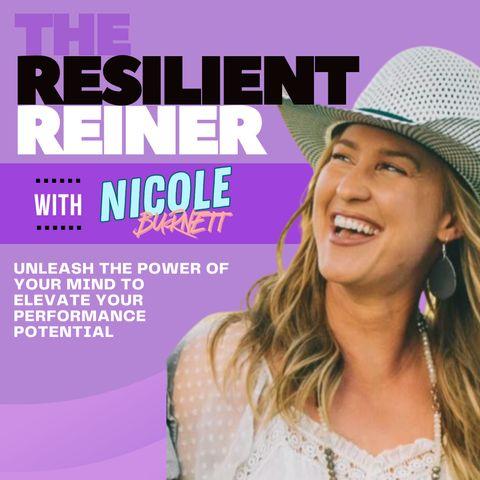
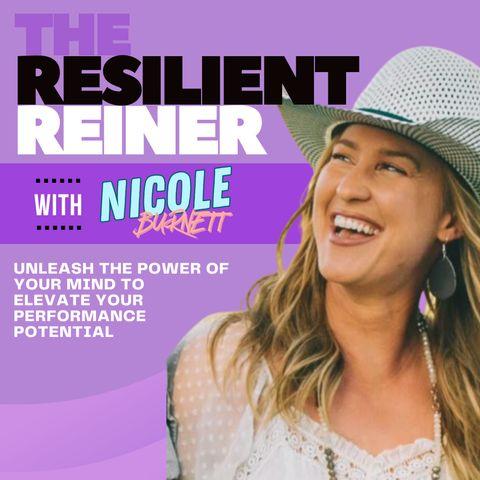
Podcast by Nicole Burnett

Resilient Reiner

The Resilient Reiner with Nicole Burnett is your go-to podcast dedicated to mental performance coaching for reiners and western horse riders. Join us as we explore the power of the mind and how it can elevate your performance with your horse to new heights. Each episode uncovers invaluable strategies, techniques, and mindset shifts to help you overcome mental barriers, boost confidence, and achieve peak performance in the saddle. From managing competition nerves to cultivating focus and resilience, our podcast provides actionable insights and real-life stories that inspire and empower horse riders at all levels. Whether you're a passionate non-pro, rookie reiner, veteran competitor or seasoned pro, The Resilient Reiner is your go-to source for sharpening your mental edge and unlocking your equestrian potential & transforming your riding journey. Tune in, harness the power of your mind, and ride towards excellence.

Latest episodes

episode artwork

25 March 2026

#203 What Most Riders Miss About Horse Nutrition and Conditioning with Bethany Wiley

Everybody loves to post the clean horse, the shiny run, and the “living the dream” part of life with horses.

Meanwhile, somebody’s out in knee-deep mud busting ice out of water tubs, trying to figure out why a horse looks “fine” on paper but still isn’t thriving.

That gap right there? That’s where this episode lives.

In this conversation, I’m sitting down with Bethany Wiley from Little Red and Her Horses—a barrel racer, horse owner, and barn owner who runs a lesson and boarding program alongside a small breeding operation focused on barrel horses. She’s competing on open horses now with plans to futurity down the road, and she’s deeply committed to doing things right when it comes to nutrition, conditioning, and building horses that last.

This conversation pulls back the curtain on the unsexy basics that actually make the biggest difference—feeding programs, forage quality, daily care, and the small decisions that either support your horse’s longevity… or slowly work against it.

If you’ve ever wondered whether your horse’s energy, development, or overall performance might be tied to what’s happening outside the arena—not just inside it—listen to this episode.

In This Episode You Will Learn:

  • Why the “highlight reel” version of horse ownership leaves out the very things that matter most
  • What forage testing actually is and why it can completely change your horse’s nutrition program
  • How low-quality hay can impact a horse’s energy, topline, coat, hoof quality, and performance
  • Why some horses truly can do well on forage only… and why others absolutely need more support
  • The difference between throwing supplements at a problem and building a feed program with intention
  • How a nutritionist can help you make better decisions for young horses, broodmares, senior horses, and performance horses
  • Why groundwork is still one of the most underrated horsemanship tools in the western horse world
  • What tiny confidence-building steps can look like after a horse scares you or your confidence gets rocked
  • Why conditioning is one of the biggest missing pieces in barrel racing and performance horse longevity
  • How consistent care behind the scenes affects soundness, resilience, and long-term success in the saddle
  • What it really looks like to care for horses when life is messy, the weather is awful, and motivation is low
  • Why owning horses well means thinking beyond the ride and paying attention to the whole horse

Questions I Answer

  • What does horse ownership actually look like beyond the fun part of riding?
  • Why do so many horse owners overlook nutrition until something starts going wrong?
  • What are some signs your horse’s feed program might need attention?
  • How do you know when a horse needs more than just 2 flakes of hay and grain by the scoop?
  • What role does alfalfa play in feeding western performance horses?
  • How can horse owners think more clearly about forage, concentrate, and targeted supplements?
  • What should riders watch for when a horse seems off, under-muscled, dull, or not quite thriving?
  • How do small groundwork steps help rebuild trust and confidence with a horse?
  • Why is conditioning such a big deal for barrel horses and other western performance horses?
  • What mistakes do riders make when they expect too much too fast from young horses?
  • How can horse owners stay consistent with care, even when horse life gets chaotic?
  • What lessons from horse nutrition and conditioning apply directly to better horsemanship?

Guest Instagram

Curious to see more of Bethany’s day-to-day with her horses? Follow her on IG here 👉 @littleredandherhorses

Links & Resources:

00:00

42:51

episode artwork

18 March 2026

#202 What Weight Loss Is Teaching Me

This one is a little different from my usual horse podcast episodes, but if you are a western rider, horsewoman, or busy woman trying to take care of everybody while quietly not feeling great in your own skin, this conversation is going to hit home. I am sharing my personal journey of losing 45 pounds—not as a “here’s the perfect formula” episode, but as a real conversation about what body change actually asks of you mentally and emotionally.

Because changing your body is not just about food, workouts, or the number on the scale. It is about identity. Self-trust. Patience. Emotional regulation. Nervous system support. It is about learning how to stay steady when progress is slow, how to stop treating yourself like a problem to fix, and how to build change from self-respect instead of self-criticism.

And honestly? That is not all that different from the work we do with horses.

If you are used to hearing me talk about resilience in the saddle, mental performance, confidence, and staying steady under pressure in the show pen, you are going to hear those same mental skills show up here too—just applied to health, strength, weight loss, and learning how to feel good in your own body again.

If you or someone you know has benefited from this episode, be sure to tag us @nicoleburnettmentalcoach and @resilientreiner on Instagram and share this episode with your community! I am curious to hear all about your experience. Also, be sure to leave a review on iTunes to help others discover the show.

In This Episode You Will Learn:

  • Why weight loss is not just a physical process—it is a mental and emotional one too
  • How identity work affects body change just like it affects confidence in the saddle
  • What it looked like for me to stop trying to “push through” and start actually supporting my body
  • The role sleep, hormones, thyroid health, vitamin D, and baseline lab work played in helping me feel better
  • Why walking became one of the most powerful tools in my health journey
  • How strength training has helped me build confidence, momentum, and trust in my body
  • Why shame makes change harder—and what helps instead
  • What emotional regulation has to do with food, cravings, consistency, and follow-through
  • How all-or-nothing thinking can quietly wreck your progress
  • Why slow progress does not mean failed progress
  • How to notice your patterns without spiraling or turning them into a moral issue
  • Why systems, support, and self-awareness matter more than self-criticism
  • The mindset shift that made consistency feel easier and more natural
  • How this health journey is already helping me feel stronger in my riding and more grounded in my life

Questions I Answer:

  • What was going on for me physically, mentally, and emotionally before I started this journey?
  • How did I know I was not just “fine,” even when I was told my labs looked normal?
  • What changed when I started working with a doctor who actually listened?
  • How did walking become such a big part of my weight loss and mental wellness?
  • Why did I hire a personal trainer, and how has strength training helped?
  • What mindset skills from horse riding and western performance apply directly to weight loss?
  • How do emotional regulation and nervous system support affect eating habits and consistency?
  • What do I do instead of spiraling when progress feels slow?
  • How do I stay committed without turning everything into pressure, panic, or punishment?
  • What beliefs have I had to change in order to make this sustainable?
  • What has surprised me the most about this process so far?
  • What do I hope other women and riders take away from this episode?

Links & Resources:

00:00

46:11

episode artwork

10 March 2026

#201 Ask These 5 Questions Before You Hire a Mindset Coach for Horse Show Nerves

Not every mindset coach is built for the show pen.

Some will leave you inspired.

Some will give you great journal prompts.

Some will tell you to “just believe in yourself.”

And none of that helps much when your horse lopes through the gate and your brain suddenly forgets how to ride the way it did at home.

If you’re thinking about hiring a mindset coach for riding, this episode will help you avoid the biggest mistake riders make when looking for mental performance help—and show you exactly what to look for instead.

Because here’s the truth: most riders who struggle under pressure aren’t lacking confidence—they’re lacking a system that works when adrenaline hits.

In this episode, I’m breaking down the five questions every rider should ask before hiring a mindset coach for horse show nerves. We’ll talk about how to tell the difference between motivational advice and real performance coaching, why riding great at home but struggling at shows is incredibly common, and what kind of mental training actually holds up in the saddle when it matters most.

If you’ve ever wondered whether mindset coaching could actually help your riding—or how to find the right kind of help—this conversation will give you clarity before you invest your time, money, and trust.

If you or someone you know has benefited from this episode, be sure to tag us @nicoleburnettmentalcoach and @resilientreiner on Instagram and share this episode with your community! I am curious to hear all about your experience.

Also, be sure to leave a review on iTunes to help others discover the show.

In This Episode You Will Learn

  • Why many skilled riders still struggle under pressure in the show pen
  • The difference between a skill problem and a pressure problem
  • How thoughts, nervous system state, and rider identity affect performance differently
  • The biggest mistake riders make when hiring a mindset coach
  • Why motivation alone doesn’t hold up when adrenaline hits
  • What kind of mental coaching actually works in the saddle, not just in theory
  • How understanding your brain’s response to pressure changes the entire game
  • Why nervous system regulation is more powerful than “positive thinking”
  • The red flags that suggest a mindset coach might not be the right fit
  • The green flags that show a coach can truly help riders perform under pressure
  • What real mental skill training looks like between sessions
  • How repeatable mental reps can help riders stay steady in the show pen

Questions I Answer

  • How do you know if your riding problem is technical… or mental?
  • Why do you ride great at home but struggle at shows?
  • What actually happens in the brain and body when pressure hits?
  • Why doesn’t motivational coaching fix show nerves?
  • What should a mindset coach be able to explain about performance under pressure?
  • What kind of tools should work in the saddle, not just in a journal?
  • Why do riders tighten up even when they want to stay calm?
  • What should practice look like between mental coaching sessions?
  • How can riders measure whether mental training is actually working?
  • What questions should you ask before hiring a mindset or mental performance coach?

Links & Resources:

00:00

19:48

episode artwork

04 March 2026

#200 Colts Will Test You. Here’s the Rule That Saves You

This will change how you handle spooks, bucks, bolts and show nerves.

You know that split second before you lope off at a horse show — when your horse feels normal, the ground feels normal… but your brain is acting like you’re about to enter a survival situation?

Yeah. That.

One shadow at the in-gate and suddenly your mind is predicting a spook, a bolt, a missed lead change, a blown pattern, and a full existential crisis about your ability as a horse rider — all before your horse has even taken the first stride.

Here’s the uncomfortable truth: most riders don’t struggle in the show pen because their horse exploded.

They struggle because they rode like it was about to happen.

In this episode, I’m breaking down the rule I had to make non-negotiable while starting young horses and colts:

Don’t panic until you need to panic.

This one principle will change how you handle horse show nerves, young horse uncertainty, pattern anxiety, and those “I know how to ride… why can’t I ride right now?” moments.

We’re talking nervous system science, survival wiring, and the difference between a real threat and your brain rehearsing disaster. If you ride horses — especially under pressure — this one is going to hit home.

If you or someone you know has benefited from this episode, be sure to tag us @nicoleburnettmentalcoach and @resilientreiner on Instagram and share this episode with your horse riding community! I am curious to hear all about your experience.

Also, be sure to leave a review on iTunes to help other horse riders discover the show.

In This Episode You Will Learn:

  • Why your brain defaults to worst-case scenarios during horse riding
  • The real job of your nervous system — and why it prioritizes safety over performance
  • How overthinking a possible horse spook turns a “maybe” into a body-level emergency
  • Why mentally rehearsing disaster does not improve your horse show performance
  • The “mountain lion vs rock” survival wiring that affects riders under pressure
  • How anxiety evolved to keep you alive — not to help you win a class
  • The cost of riding your horse like catastrophe is already happening
  • Why calm in the saddle isn’t a personality trait — it’s a trained skill
  • The exact 4-step mental reset you can use during a training ride or in the show pen
  • How to tolerate uncertainty on a young horse without turning it into panic
  • What it really means to stay “online” in your body when your horse feels unpredictable

Questions I Answer:

  • Why do you feel more nervous at a horse show than you do at home on the same horse?
  • Why does my body get tight before anything even goes wrong?
  • Is it bad to think through worst-case scenarios before you ride?
  • Why does my brain spiral about a spook or missed lead change that hasn’t happened?
  • How do you stop mentally riding the wreck before my horse gives me new information?
  • What do you do in the moment when you feel that “I can’t breathe and I can’t feel my legs” feeling?
  • How can you ride a young horse or colt without constantly bracing for something bad?

Links & Resources:

00:00

12:16

episode artwork

27 February 2026

#199 How to Get Your Horse to Respond to You

There’s a moment that’ll humble even the most seasoned rider: you pick up your reins, ask for something simple, and your horse answers… but not quite the way you meant. Delayed. Sticky. Bracey. And suddenly the ride turns into a quiet tug-of-war where nobody feels heard.

In this episode, I’m pulling back the curtain on a truth that’s both uncomfortable and freeing: most “unresponsive horse” problems aren’t really about your horse at all. They’re about communication happening inside a nervous system storm. We’re diving into how your body broadcasts signals louder than your aids, why responsiveness starts with regulation, and the simple shifts that turn frustration into clarity so your horse can actually understand you.

If you or someone you know has benefited from this episode, be sure to tag us @nicoleburnettmentalcoach and @resilientreiner on Instagram and share this episode with your community! I am curious to hear all about your experience. Also, be sure to leave a review on iTunes to help others discover the show.

In This Episode You Will Learn:

  • How to get your horse to listen to you
  • The hidden role your nervous system plays in dull, reactive, or bracey responses
  • How fight, flight, or freeze shows up in your aids without you realizing it
  • The cycle that creates escalating pressure between horse and rider
  • Why responsiveness isn’t built through force, but clarity and timing
  • What a regulated rider actually does differently in the saddle
  • A simple pre-ride reset to improve communication instantly
  • How eye softness, breath, and body quietness change your horse’s willingness
  • The real “response” you’re training beyond physical cues
  • Why nervous system training matters even more when you haul out or ride under pressure

Questions I Answer:

  • Why does your horse’s response to your cues feel dull or delayed?
  • Is your horse ignoring you — or are youI accidentally giving mixed signals?
  • How does nervous system activation affect responsiveness?
  • What does escalation from the rider feel like from the horse’s perspective?
  • How can you improve timing without trying harder or using more pressure?
  • What simple reset can you use before mounting or during sticky moments?
  • How do top riders create horses that “hunt the cue”?
  • What’s the difference between forceful responsiveness and willing responsiveness?
  • Why does everything feel easier at home but fall apart in new environments?

Links & Resources:

00:00

18:45

episode artwork

19 February 2026

#198 The Mental Skill Pro Riders Use to Make Fast Calls Mid-Run

A run rarely falls apart because of one mistake. More often, it slips away because of what happens in the three strides after something goes a little sideways. A horse cuts a corner, a setup gets shortened, a rhythm feels just a touch off—and suddenly the rider is chasing instead of riding. That moment right there? That’s where the real mental game lives.

If you’ve ever frozen in the show pen, blanked out mid-pattern, or started overthinking in your run—especially in ranch riding and reining patterns where there’s a new job every few seconds—this episode is for you.

In this episode, I’m breaking down the mental skill elite riders use to make fast, clean calls mid-run without spiraling, freezing, or rushing. We’re talking about Decision Windows—the tiny slices of time where you still have options—and how learning to stay mentally organized inside those moments changes everything about your timing, feel, and confidence in the pen.

Want to start training this skill right away?

Join 5 Days to Confident Competitor (5DCC)—my 5-day training designed to help you stay present, regulate fast, and stop spiraling mid-run. Grab it here: https://nicoleburnettcoaching.thrivecart.com/5-days-to-confident-competitor/

If you enjoyed this episode, tag us @nicoleburnettmentalcoach and @resilientreiner on Instagram and share it with your community. And leaving a review on iTunes helps more riders find the show.

In This Episode You Will Learn:

  • Why “one small bobble” rarely costs the run—and what actually does
  • How show-pen pressure changes your attention (and your decision-making speed)
  • The three most common ways riders lose their timing mid-pattern: freezing, rushing, or second-guessing
  • What a Decision Window is and why recognizing it gives you back control mid-run
  • The fast mental reset pro riders use after something goes slightly off plan
  • How rhythm and line determine whether you still have time to make a clean call
  • The mindset shift that keeps riders from chasing mistakes through the rest of the pattern
  • How to train your nervous system to stay mentally “online” when pressure spikes

Questions I Answer:

  • Why do you blank out or start overthinking in the middle of a run even when you know the pattern?
  • How do you stop rushing after something small goes wrong?
  • What should you focus on right after a mistake so the rest of the run stays together?
  • How do top riders make split-second decisions without panicking?
  • Is the goal to make the perfect decision—or the committed one?
  • How can you keep your timing when my setup gets slightly off?
  • What mental skill actually helps riders stay present under pressure?

Links & Resources:

00:00

24:59

Copyright © Resilient Reiner. All rights reserved.

Powered by